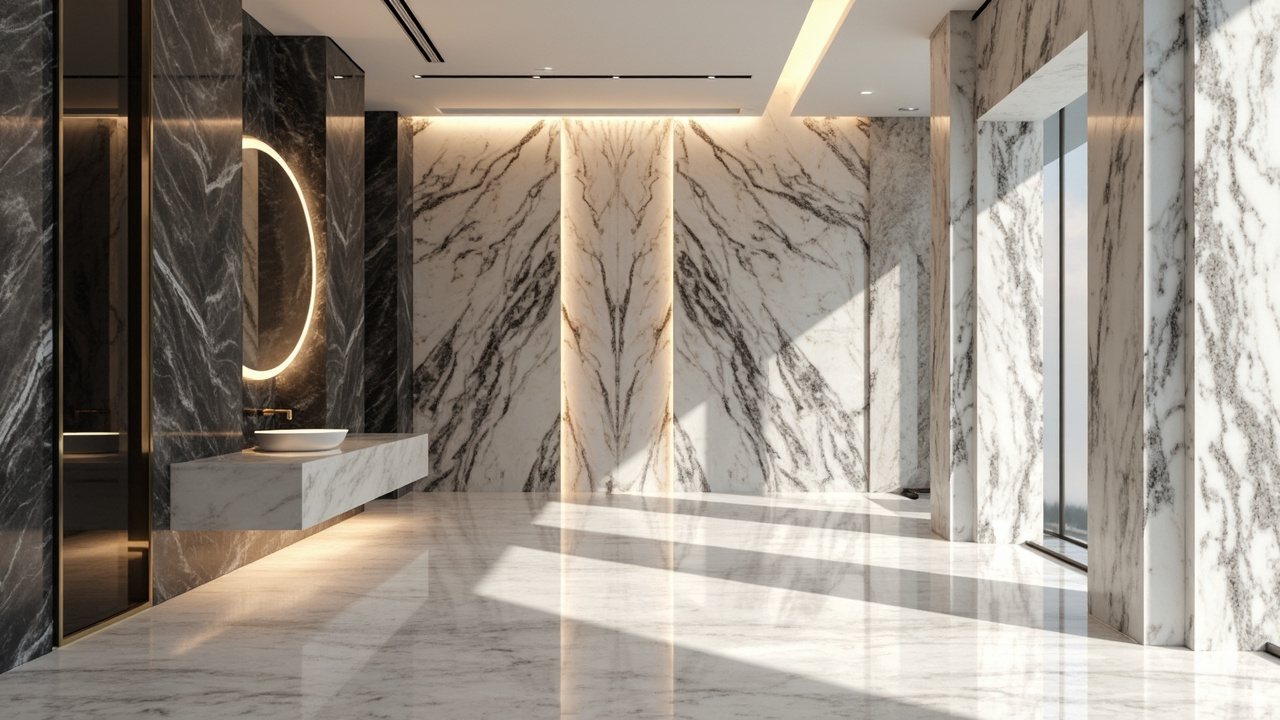
Organic luxe blends raw natural textures with refined minimalism. Italian marble - with its unique veining and cool touch - has become the cornerstone material of this defining 2026 design direction.
The Shift from Ornament to Essence
Luxury in residential interiors has undergone a profound recalibration. Where the previous decade favored spectacle — high-gloss surfaces, gilded accents, and visibly expensive finishes — today's most discerning clients gravitate toward restraint, material honesty, and quiet sophistication. At the center of this shift stands organic luxe, a design language that draws its richness not from ornamentation but from the intrinsic character of natural materials.
Marble sits at the heart of this movement. Each slab carries millions of years of geological history, veining and tonal variation that no engineered surface can replicate. For architects and developers working on premium residential projects, marble offers something increasingly rare in contemporary interiors: authenticity.
Marble as the Anchor of Biophilic Design
Biophilic design — the practice of connecting built environments to natural systems — has moved from theoretical framework to practical specification. Stone, and marble in particular, plays a structural role in this approach. Its mineral composition, thermal mass, and visual depth contribute to interiors that feel grounded rather than manufactured.
"Stone is the only material that improves with time — acquiring a deeper meaning as it meets the hands that use it."
The tactile experience matters as much as the visual. A honed marble floor in a quiet entryway, a book-matched feature wall behind a freestanding tub, a monolithic island carved from a single block — these elements engage the senses in ways that flat, uniform materials cannot. They invite touch, slow the eye, and create what designers increasingly recognize as essential to luxury: presence.
Specifying Natural Stone with Intentionality
The modern luxury interiors market demands transparency in material sourcing. Clients — and the architects advising them — are asking sharper questions about provenance, quarrying practices, and processing methods. This is where specification becomes a defining act of design.
- Quarry origin: Identifying the geological region shapes both aesthetic outcome and project narrative. Carrara, Calacatta, and Statuario marbles each carry distinct visual signatures rooted in their specific quarries.
- Block selection: Choosing the block before cutting allows designers to influence veining direction, bookmatching opportunities, and overall yield.
- Finish specification: Honed, polished, brushed, or leathered finishes alter not only appearance but also the material's relationship with light and use.
- Fabrication precision: CNC cutting, waterjet technology, and traditional hand-finishing each contribute differently to the final installation.
Applications Defining Contemporary Luxury Residences
Across high-end residential developments, marble is being deployed in ways that reflect the organic luxe ethos. The most compelling applications share a common thread: they treat stone as architecture, not surface dressing.
- Statement bathrooms — full-slab shower walls and integrated basins that eliminate grout lines and emphasize material continuity.
- Kitchen islands — thick-edge profiles, often mitered, that read as furniture rather than countertop.
- Vertical bookmatched panels — transforming entry walls, fireplace surrounds, and headboard surfaces into geological portraits.
- Staircases and flooring — monolithic treads and large-format tiles that establish flow and rhythm throughout the home.
- Outdoor transitions — honed or flamed finishes that extend natural stone into terraces, pool surrounds, and garden walls.
Pairing Marble with the Material Palette of Organic Luxe
The strength of marble in modern luxury interiors lies in its compatibility with other honest materials. Designers are increasingly pairing natural stone with elements that share its tactile, elemental qualities: lime-washed plaster walls, raw oak flooring, unlacquered brass, hand-blown glass, and woven natural textiles.
These combinations avoid the pitfall of material competition. Instead, each surface is allowed to express its own character while contributing to a unified atmosphere. The result is an interior that feels curated rather than decorated — a quality that defines the most successful organic luxe projects today.
The Next Chapter: Sculptural and Sustainable Stone
Looking ahead, two trajectories are reshaping how marble is specified in luxury residential work. The first is sculptural: stone is being shaped into curved basins, fluted columns, and organically contoured furniture pieces that push beyond traditional slab applications. The second is environmental: water recycling at quarries, diamond wire cutting that reduces waste, and certification programs that trace stone from mountain to installation.
For architects and developers, these developments matter. They expand the design vocabulary available in natural stone while answering client demand for responsible specification. Marble, long associated with permanence and prestige, is also becoming a material of innovation — one that continues to define what luxury means in the residential sphere.
Explore Collection
Explore our extensive range of Italian marble, sourced directly from the quarries of Carrara and processed to the highest international standards.
View Full Catalog -