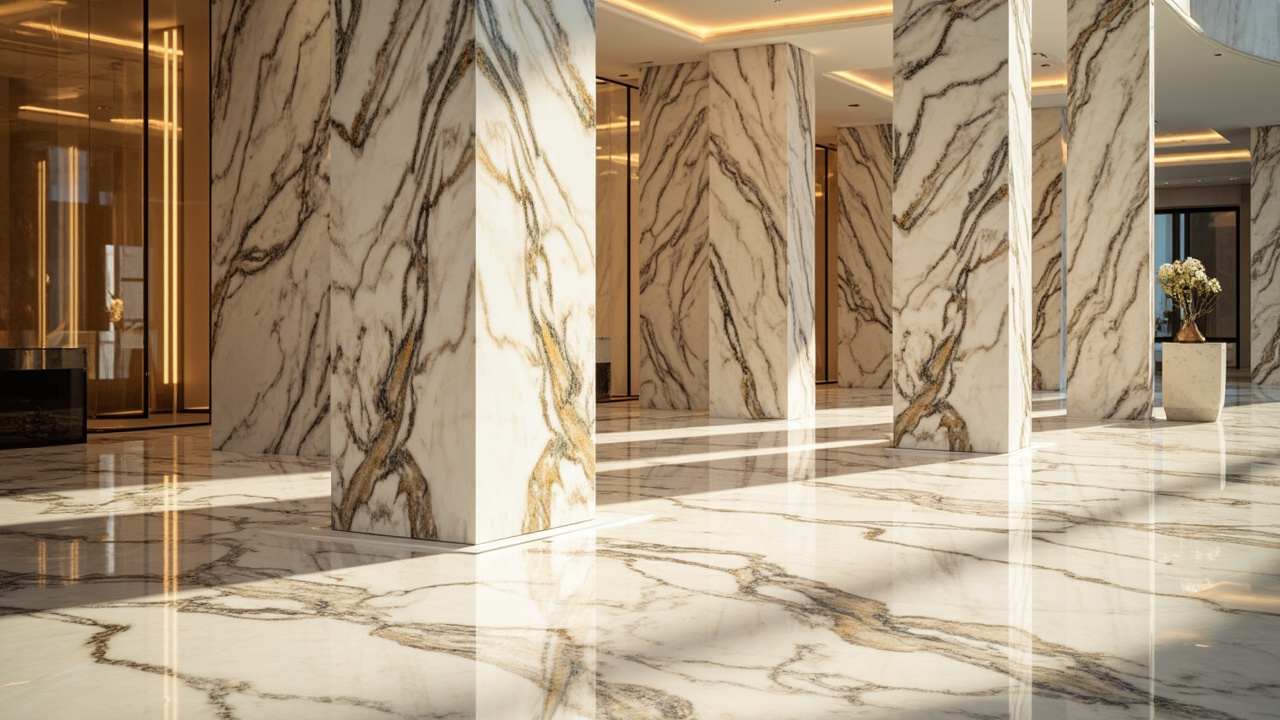
From Riyadh to Singapore, Italian marble is the defining material of 2026 luxury hotel projects. We break down the spec trends, stone choices, and technical requirements driving this boom.
The 2026 Hospitality Landscape: A Marble Renaissance
Five-star hotel development is accelerating at a pace not seen since the pre-2008 era, and the material palettes defining these projects tell a clear story. Across the Gulf, the Italian Alps, and the hospitality corridors of Tokyo, Singapore, and Seoul, Italian marble has reasserted itself as the definitive surface for luxury hotel design — not as nostalgia, but as a deliberate specification choice tied to longevity, provenance, and sensory experience.
Saudi Arabia's Vision 2030 has been the most visible catalyst. The Diriyah, Jeddah Central, and Red Sea developments — along with a wave of new-build resorts in NEOM — are commissioning volumes of Calacatta, Statuario, and travertine that exceed any single national program in recent memory. Parallel investment in Southern Europe, particularly the Italian, Spanish, and Greek hospitality markets, and a renewed wave of luxury refurbishments across Southeast Asia, have created a global demand curve that quarry operators in Massa-Carrara, Botticino, and Tivoli are working to meet.
Why Italian Marble for the Hotel Lobby
The hotel lobby remains the single most photographed and most specified interior in any hospitality project. It is also the space where material decisions carry the longest commercial lifespan — lobby refurbishments are rare, often tied to full rebrands spanning ten to fifteen years. For architects and developers, this makes the lobby the most defensible case for premium stone specification.
- Visual continuity: Italian marble allows seamless transitions between flooring, cladding, reception desks, and bar fronts within a single material family.
- Light performance: Statuario and Calacatta varieties interact with both natural and artificial lighting in ways engineered composites struggle to replicate, particularly in double-height volumes.
- Acoustic weight: Stone surfaces contribute measurable acoustic damping in large, hard-surfaced lobbies — a quiet specification benefit often overlooked in early-stage design.
- Asset value: Provenance documentation from quarries in Carrara or Botticino adds traceable value to the property's material inventory, increasingly relevant for ESG-aligned buyers.
Specification Considerations for 2026 Projects
Specifying Italian marble in 2026 is no longer a single decision but a layered technical conversation. Architects working on hospitality projects at this scale are routinely engaging with quarry operators and stone consultants twelve to eighteen months before installation, rather than relying on distributor stock.
The most consequential specification choices now involve:
- Block selection: Premium hotel projects typically require quarry visits to select specific blocks, ensuring bookmatched veining continuity across large lobby walls and reception surfaces.
- Finish selection: Honed, leathered, and bush-hammered finishes are gaining ground over polished surfaces in high-traffic areas, addressing both slip ratings and the softer, more residential aesthetic trending in post-pandemic luxury.
- Slab dimensions: Demand for 2 cm and 3 cm slabs in larger formats — particularly 160 × 320 cm and beyond — is reshaping cutting and handling protocols across European fabrication facilities.
- Veining tolerance: Specifications now routinely distinguish between A1, A2, and commercial-grade selections, with pricing differentials reflecting the growing precision demanded by interior designers.
"The lobby is no longer a transitional space — it is the brand. When you specify Italian marble here, you are making a thirty-year statement about what that brand represents. There is no substitute for that kind of permanence." — Patricia Urquiola, in conversation at Salone del Mobile 2025
Regional Tendencies: Three Markets, Three Approaches
While the underlying preference for Italian marble is consistent, the application logic varies significantly across regions.
In the Middle East, scale dominates. Lobby walls exceeding six meters in height, full-floor bookmatching, and monolithic staircase cladding are now baseline expectations for properties targeting international luxury travelers. The thermal performance of natural stone — particularly its ability to moderate surface temperatures in heavily glazed atria — is increasingly cited by MEP consultants as a specification driver.
European projects in 2026 are leaning toward restraint. Designers working on heritage conversions and boutique properties are specifying Italian marble in smaller, more deliberate gestures — a single Statuario reception counter, honed travertine flooring, or fluted marble wall panels — rather than full-surface applications. The emphasis is on tactility and the imperfect, mineral-rich surfaces that define contemporary Italian production.
Across Asia, particularly in Tokyo, Seoul, and Taipei, the trend is toward precision. Tighter vein matching, near-zero tolerance fabrication, and integration with backlit translucent stone panels are pushing Italian quarries and fabricators into new technical territory.
Sourcing, Sustainability, and the Documentation Question
No specification conversation in 2026 is complete without addressing provenance and environmental documentation. Hotel groups operating across multiple jurisdictions — including Marriott International, Four Seasons, Mandarin Oriental, and the expanding network of Saudi-backed operators — are increasingly requiring quarry-of-origin documentation, chain-of-custody records, and lifecycle assessment data as standard procurement conditions.
Italian quarries have responded with greater transparency, including digital block tracking, water recycling certifications, and quarry restoration plans. For specifiers, this means the question is no longer whether Italian marble can meet sustainability criteria, but which quarries and processors can provide the documentation required by a given brand's ESG framework.
Working With Consultants Early
The complexity of contemporary marble specification has made early-stage collaboration between architects, interior designers, and stone consultants effectively mandatory on projects of scale. Developers who treat marble as a late-stage procurement item consistently face longer lead times, narrower selection, and higher per-square-meter costs than those who engage quarry-side expertise during schematic design.
For 2026 and beyond, the most successful hotel projects will be those that treat Italian marble not as a finishing material, but as a structural design decision — one that shapes space, light, and brand identity from the earliest stages of concept development.
Explore Collection
Explore our extensive range of Italian marble, sourced directly from the quarries of Carrara and processed to the highest international standards.
View Full Catalog -